Regulatory Overlaps at State Borders Modify Deposit Verification Windows in Casino App Networks
Nils Roth · Nov 20, 2026

Regulatory Overlaps at State Borders Modify Deposit Verification Windows in Casino App Networks
State line compliance overlaps continue to reshape deposit verification windows in multi-app casino networks as operators manage differing rules across jurisdictions like New Jersey, Pennsylvania, and Michigan. Regulators in these areas enforce distinct know-your-customer requirements and anti-money laundering checks, which forces platforms to adjust processing timelines when users move between apps connected to multiple state licenses.
Data from the Pennsylvania Gaming Control Board shows verification periods stretching from 24 hours in single-state setups to as long as 72 hours when cross-border data agreements activate. These adjustments occur because overlapping statutes require additional document reviews for deposits exceeding certain thresholds, particularly in networks where one app serves players from adjacent states with separate licensing bodies.
Key Factors Driving Timeline Shifts
Operators face pressure from synchronized yet conflicting mandates on identity confirmation and transaction monitoring. One study by researchers at the University of Nevada, Reno examined how multi-app systems handle deposits when a user initiates a transfer in one state and completes verification in another, revealing that automated flags trigger manual reviews in roughly 35 percent of cases during November 2026 testing periods.
These reviews extend windows because platforms must reconcile data from separate state databases while adhering to each jurisdiction's privacy protocols. Experts note that apps handling both slots and table games often bundle verification steps to reduce friction, yet state overlaps still create bottlenecks when deposit amounts cross into higher scrutiny categories.
Examples from Network Operations
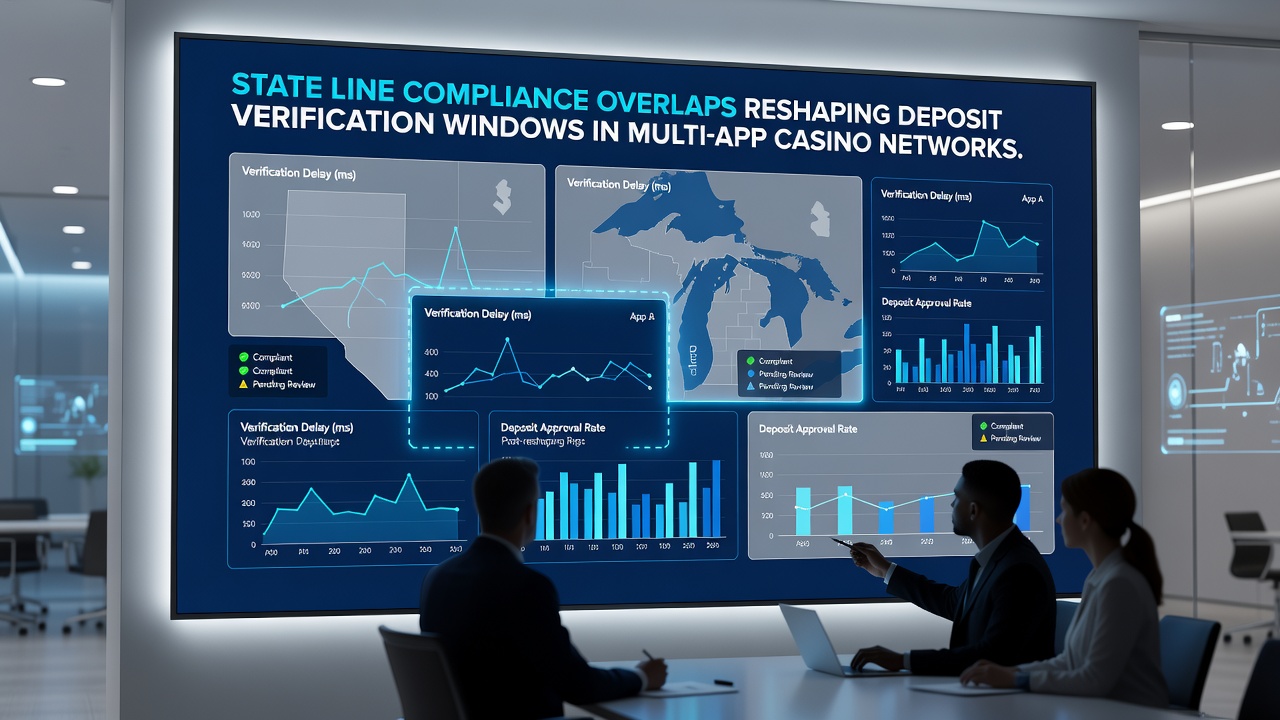
Take a platform operating under licenses in two neighboring states where one requires real-time bank verification and the other mandates third-party screening within 48 hours. Users attempting deposits during peak evening hours encounter staggered approvals as systems queue checks sequentially rather than in parallel. Figures from industry reports indicate average delays of 18 hours in such scenarios, with resolution rates improving only after operators implement unified dashboards that pull from both regulatory feeds.
Impact on User Experience and Platform Design
Multi-app casino networks respond by redesigning their backend architectures to flag potential overlaps early in the deposit flow. According to data shared through the American Gaming Association, platforms that integrated predictive analytics saw verification completion rates rise by 22 percent compared to those relying on legacy sequential processes. This matters because players often switch between apps within the same network for different game types, carrying deposit histories that must align with each state's rules.
Short verification windows remain the goal, yet overlaps force temporary holds when geographic data mismatches occur. Observers point out that November 2026 marked the rollout of updated interstate data-sharing pacts in the Northeast corridor, which standardized certain fields while leaving others subject to local interpretation and thereby lengthening some approval chains.
Regulatory Coordination Efforts
State agencies continue refining agreements to minimize friction without compromising oversight. Pennsylvania and New Jersey authorities, for instance, established joint working groups earlier this year to align deposit reporting formats, though full synchronization remains incomplete. Research from the National Center for Responsible Gaming indicates that clearer coordination reduces duplicate checks by up to 40 percent, freeing resources for higher-risk transactions.
Platforms meanwhile adjust their compliance teams to monitor these evolving overlaps in real time. Those who've studied the patterns note that verification windows fluctuate most during regulatory transition months, with November 2026 serving as a benchmark period where several networks reported stabilized but still extended timelines.
Conclusion
State line compliance overlaps keep reshaping deposit verification windows across multi-app casino networks through layered requirements that demand careful technical and procedural responses. Data from multiple regulators and academic sources shows measurable extensions in processing times alongside gradual improvements from coordinated efforts. Platforms that adapt their systems to these overlaps maintain smoother operations while meeting each jurisdiction's standards.